Planning & Budgeting
Can You Build in the Winter? What Massachusetts Homeowners Should Know About Cold-Weather Construction
Signature Series Construction
Short answer: yes, you can build in a Massachusetts winter. Plenty of work happens between December and March, and some of it goes better in the cold. But winter does change the sequence, the logistics and sometimes the budget. Knowing how before you sign a contract helps you decide whether to start now or wait for spring.
Why Winter Construction Is Different
Cold weather affects construction in three main ways:
- Materials have temperature limits. Concrete, mortar, adhesives, sealants, paint and some roofing products need minimum temperatures to cure or bond properly.
- Site conditions change. Frozen ground, snow and ice affect excavation, access, deliveries and safety.
- Days are shorter and less predictable. Less daylight and storm days mean schedules need more flexibility.
A good contractor plans around these things instead of ignoring them. The goal is the same quality you would expect in July, reached by different means.
Work That Often Goes Well in Winter
Interior projects
Once a home is enclosed and heated, interior work is largely independent of the weather. That includes:
- Basement finishing
- Kitchen and bath renovations
- Framing, insulation, drywall, trim and flooring inside an existing home
- Interior work on ADUs and in-law suites
If your project is mostly inside the existing envelope, winter can be a very practical time to do it. Keep in mind that some interior trades, such as drywall finishing and paint, need steady, controlled temperatures. Temporary heat is common.
Framing and dry-in
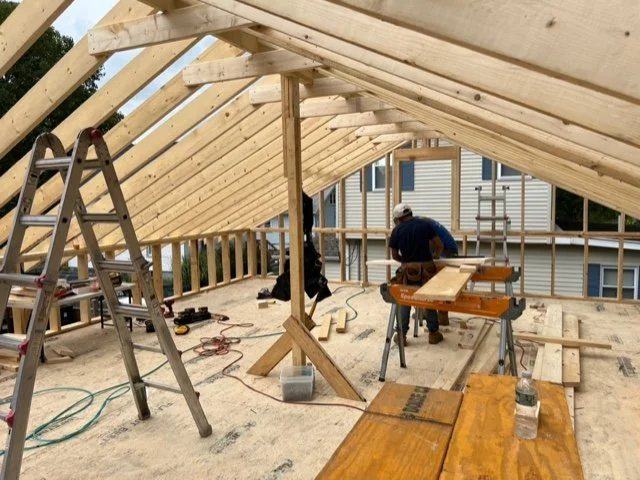
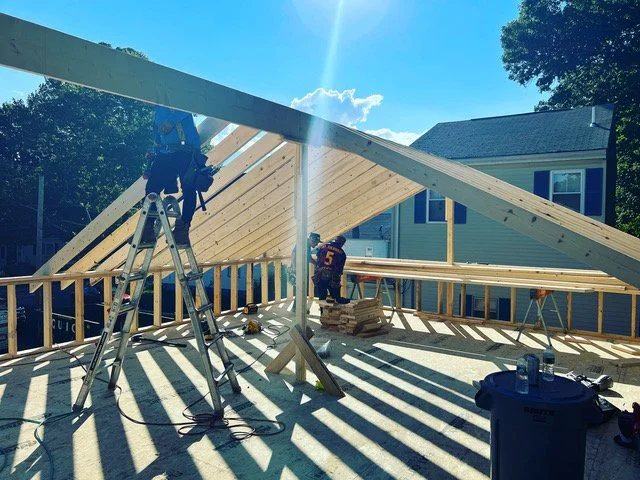
Framing itself can continue in cold weather. The key is getting the structure enclosed (roof, sheathing, windows and doors) so the interior can be protected from snow and rain. Wet lumber and open framing exposed to repeated snowfall can cause problems later, so protecting the building matters more than whether the crew can physically swing a hammer.
Planning, design and permitting
Winter is a great time to do the thinking. Design development, selections, engineering, ordering and permit applications can all move forward in the cold months so you are ready to break ground when conditions improve. Permits are issued by your local building department, and their timelines vary by town, so ask your town what to expect.
Work That Gets Harder or More Expensive
Foundations and concrete
Concrete is the biggest cold-weather concern. Fresh concrete should not freeze before it gains strength, and it cures more slowly in cold conditions. Crews may use insulated blankets, heated enclosures, specialized mixes or admixtures, and extra monitoring. Frozen ground may need to be thawed or removed before placing footings, and footings have to sit on proper, unfrozen soil below the frost depth required by the building code.
That does not mean foundations can't be poured in winter. It means the protection steps add cost and coordination. Under a cost-plus agreement, those protection costs show up as real line items so you can see exactly what they are.
Excavation and site work
Frozen soil is harder to dig, and snow cover can hide existing conditions. Drainage, grading and utility work are often easier once the ground thaws.
Masonry, hardscapes and pools
Stone, pavers, mortar, pool construction and similar outdoor work are generally best saved for warmer months. Mortar and grout need temperature protection, and frozen or saturated ground is a poor base for patios and walkways. If your plans include outdoor living space as part of a bigger project, it often makes sense to stage the exterior portion for spring.
Roofing, siding, paint and sealants
Many exterior products have manufacturer-specified temperature ranges. Asphalt shingles may not seal down as designed in cold weather, caulks may not cure well, and exterior paint and stain have minimum application temperatures. Experienced crews pick their windows carefully and may use cold-rated products, but some tasks simply wait for a mild day.
What Winter Does to Your Schedule
If you are planning a winter start, build some flexibility into your expectations:
- Weather days happen. Snow, ice and extreme cold can pause exterior work, deliveries and inspections.
- Sequencing may shift. A contractor might start with interior or enclosed work and save certain exterior steps for spring.
- Inspections still apply. Your local building department's inspection process continues in winter, though weather can affect scheduling.
- Supplier lead times vary. Windows, doors, trusses and specialty materials have their own timelines regardless of the season. Order early.
A firm start date is less useful than a clear plan for the order of work and what happens if weather interferes. Ask for that plan up front.
How Winter Can Affect Your Budget
Winter does not automatically make a project cost more, but it can add specific items. Cost drivers to ask about include:
- Temporary heat and enclosures to protect work in progress
- Concrete protection, such as blankets, heaters or special mixes
- Snow removal and site access during the project
- Extra protection for open framing or exposed areas
- Schedule impacts that extend the time crews and equipment are on site
On the other side, some homeowners find that planning and ordering in winter helps them lock in a spring start without delay. Whether your total cost changes depends on your project's scope and sequence, so talk it through with your builder rather than relying on rules of thumb.
This is one reason SSC works on a transparent cost-plus basis: actual project costs plus a fee agreed in writing. If winter protection is needed, you can see what it is and why, rather than discovering it buried in a lump sum.
Questions to Ask Your Contractor About Winter Work
Before committing to a cold-weather start, ask:
- Which parts of my project make sense to do now, and which should wait?
- How will you protect the structure from snow and moisture once it is open?
- If concrete is involved, what is the cold-weather plan?
- How will weather delays be communicated and handled?
- What temporary heat or site protection is included, and how is it billed?
- How will you keep my household's access, safety and daily life manageable during the work?
Be cautious of anyone who says winter makes no difference at all, or who is vague about how they will protect your home. In Massachusetts, also confirm that your contractor holds the required Home Improvement Contractor registration and that a Construction Supervisor License is in place for the work, and that your contract is in writing.
Should You Start Now or Wait for Spring?
There is no single right answer. A reasonable rule of thumb:
- Start in winter if your project is largely interior, or if you want design, permitting and ordering done so spring construction can begin immediately.
- Consider waiting if your project hinges on foundations, extensive excavation, masonry, hardscapes or a pool, where good weather directly affects quality and cost.
- Split the project when it makes sense: interior and enclosed work first, exterior and site work when the ground thaws.
Often the best move is to begin planning now, even if the first shovel doesn't go in the ground until later.
Talk With SSC About Your Project
Signature Series Construction is a veteran-owned residential general contractor serving Greater Boston, the North Shore, MetroWest, the Merrimack Valley, the South Shore and Southern New Hampshire. We build additions, whole-home renovations, basements, ADUs and in-law suites, and custom homes, with detailed planning, regular project meetings and hands-on quality control.
If you're wondering whether your project should start this winter or be ready for spring, request a consultation. We'll talk through your goals, what can be done in cold weather, and how to sequence the work so you get the result you want.
Planning a project like this?
Talk with Signature Series Construction about scope, budget and timing.
Start a Consultation